
|

We have talked about anatomy in a previous blog, and we cannot overstate the importance of anatomy for certain piercings. Anatomy plays a key role in whether or not a piercing can be performed, but there are some piercings that, due to safety concerns, should never be performed under any circumstances.
Before we really get into the subject of why certain piercings shouldn’t be performed, let’s talk about the range of ‘standard’ piercings we see day to day. The piercing placements we frequently see performed, on ear body and face, are all tried and true placements, defined and honed after years of experience over decades of hard work. For a multitude of piercings, placement can only be moved within the narrow confines of the anatomy. Nipple piercings can be angled, or even placed vertically, but there are relatively few alterations we can make to nipple piercings. The same can be said for septum piercings as variation is not possible for this location.
The rules for piercing placement in eyebrows, ears, noses, and lips, are not so rigid. You can opt for more unusual placement though there may be some discussion with your piercer about the viability of some piercings, as well as using different jewellery to accommodate the piercing, and extended healing times.
Mantis piercings are a great example of using the space to create new and inventive piercing placements. A mantis piercing, in essence, is still a standard nose piercing, just brought further toward the front of the nose. The same can be said for many of the standard ear piercings on offer. Anatomy dependent, there are myriad unique ear-piercing placements to play with, and we don’t always have to settle for the standard placement.
The art of body-piercing is creative as far as anatomy and safety allows, and doubtless by 2026 most placements have been tried and tested. Some have stayed as part of a piercers repertoire while some have been disregarded as reckless or unviable.
It is here that piercers diverge into two categories; those that practice with safety, knowledge, and experience, and those that continue to promote unsafe methods through ignorance, willful or otherwise. Safe piercers will know the anatomy of the body, they will recognise areas where crucial nerves and veins may reside, and will work to avoid these altogether for the safety of their clients. Unsafe piercers will pierce any tissue that is available, often ignoring the advice from other piercers in the industry in favour of an Instagram worthy image, and this only serves to put more clients at risk.
Trends appear in every industry, not always for the better, and piercing is no different. There are a few piercings that have risen in popularity over the years that have caught the attention of those that are not knowledgeable in anatomy that try to push the limits of safety in order to create a new and fashionable piercing. Let’s talk about the most contentious group.
Horizontal Tongue Piercings


I am of course talking about horizontal tongue piercings of every kind. We experience a large number of enquiries as to whether we perform the “frog eyes”, “stingray” or “scoop” piercing on the tongue, and the answer is a flat NO, and it will be a resounding NO every single time. There are multiple reasons as to why a reputable piercer will never pierce these, of which we will discuss below, but there are sadly many piercers, especially on Instagram that will claim to be professional piercers that perform these piercings proudly and have led to a rise in people clamouring to get these piercings by any means necessary.
Why We Say No
Let’s discuss the reasons why we decline to perform these piercings, and the first is to do with how they are performed. These piercings cross between two muscles that control the movement of your tongue for speech and eating. Not only are you risking damage to these crucial muscles, but you also inhibit movement in the tongue by pinning these muscles together, diminishing the range of motion necessary for eating, drinking, and speech
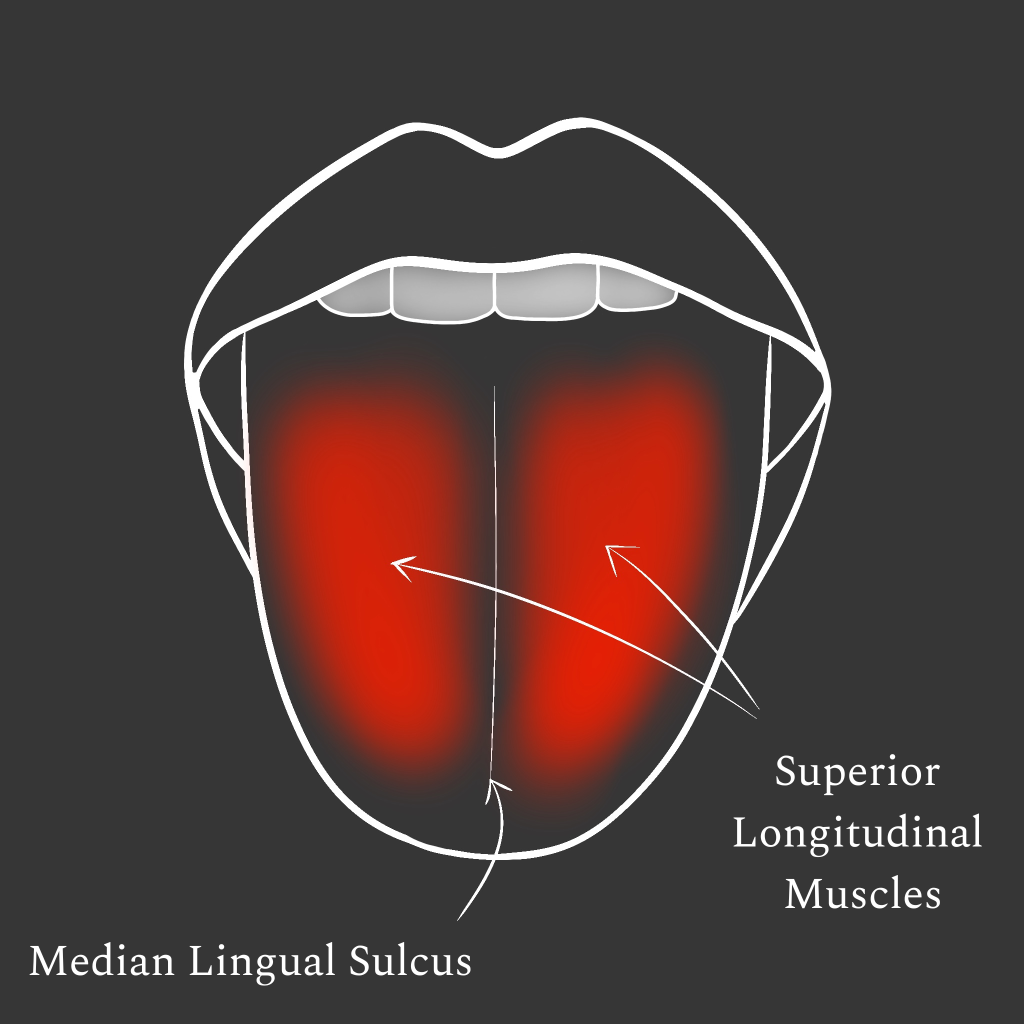


In the case of the ‘stingray piercing’ that passes underneath the tongue, you risk puncturing not one, but two large veins that run up the sides of your tongue.


The ‘scoop piercing’ that sits on the top of the tongue and mimics a pair of ‘venom piercings’ is simply a surface piercing in the tongue. The movement involved in eating, speaking, and drinking will likely be too much to allow this piercing to settle, and will likely result in rejection. This can lead to an unsightly and possibly irreparable scar on the tongue, as well as inhalation/ingestion of the jewellery.
These next issues are unavoidable, inexcusable, and often completely overlooked in favour of fashion.
Broken teeth – While breaking teeth on an ordinary tongue piercing is always a possibility, the positioning of the jewellery on a forward-facing tongue piercing such as the ‘frog-eyes piercing’ sits directly between where the teeth meet in the mouth and increases this risk to almost completely unavoidable. Biting on the metal jewellery can, and likely will, lead to cracking or breaking teeth.
Worn enamel – With the jewellery sitting so far to the front of your mouth, the rubbing of the metal jewellery against the back of your teeth will be greatly increase the risk of enamel erosion leading to weakened spots on the teeth.
Gum recession – this issue is not talked about enough in my opinion. I am a strong proponent of keeping teeth and gums healthy, and not many people realise the dangers of gum recession at all. If jewellery rubs against your gums, it will begin to wear them away, exposing the roots of your teeth which can eventually lead to loosened teeth, and even teeth to fall out. Once gums have begun to wear away or recede, they will never grow back. The only fix for this issue is gum grafting which can be extremely painful and by no means a guarantee.
All of these issues are present with horizontal tongue piercings, and all of them are entirely preventable. Dentistry is expensive, and particularly the younger generation have very little concept of how damage to teeth and gums can impact their life.
There is a strong element of ‘it could never happen to me’ when it comes to this type of piercing. My colleagues and I have a strict rule with ourselves that if our piercings are impacting our teeth in any way, we remove that piercing. Dentistry to fix ongoing issues due to inadvisable and unsafe piercing can cost you thousands, even tens of thousands. Your teeth need to be your priority.
The problem with any dangerous fashion piercing is cyclical. The piercing is inherently dangerous, and reputable piercers have done the research, they understand the dangers and will refuse to put any client in danger, thus refusing to perform this piercing on anyone. However, this is where non-reputable piercers come in. They either do not recognise, or outright ignore the dangers that these piercings pose, and continue to perform it. While there are ‘professional piercers’ still promoting horizontal tongue piercings it can be difficult for the average client to differentiate between piercers who understand the dangers and those who simply ignore the risks and take your money to perform a dangerous piercing.
There is a reason that the pioneers of piercing have never added these piercings to their standard list, and it has everything to do with safety.
My advice to anyone considering a horizontal tongue piercing is to seek safer alternatives. Not just to protect the muscles in your tongue, but to protect your teeth. No piercing is worth the damage to your body or your teeth for the sake of fashion.