
|

So, having discussed placement of stretched piercings in a previous blog, you should be armed with some knowledge about stretching, depending on your chosen area. This just leaves us with the topic of how you can begin to stretch, and most importantly, how to do so safely. Stretching should always be slow, so do not be tempted to rush out and get a stretching kit with multiple tapers and start ramming them through your ear on a whim.
Patience is Key
Almost every single day, someone asks “Did that hurt?” when referencing my stretched ears, and I always answer with, no it didn’t, and the truth of the matter is, it really didn’t hurt. There is a stretched ear mantra that is still wholly relevant today, “If it hurts, you’re doing it wrong,”. Stretching is a practice of patience as well as listening to your body, and if you are hurting yourself with a single-minded determination to reach your goals, then you are most definitely going too quickly for your body to handle. Stretching at smaller sizes can be a little pinchy, but any significant pain, particularly at larger sizes, can indicate overstretching and trauma to the skin, leading to the skin thinning, splitting, blowouts, earlobe breakage, and even tissue death. I have seen all of these in varying degrees, and all of them are completely avoidable with a gentle regime of time, care, and moisturisation. Keeping your skin hydrated and comfortable throughout your stretches is key to promoting new blood vessels to grow as you stretch for long lasting and healthy-looking lobes.
Safe Stretching
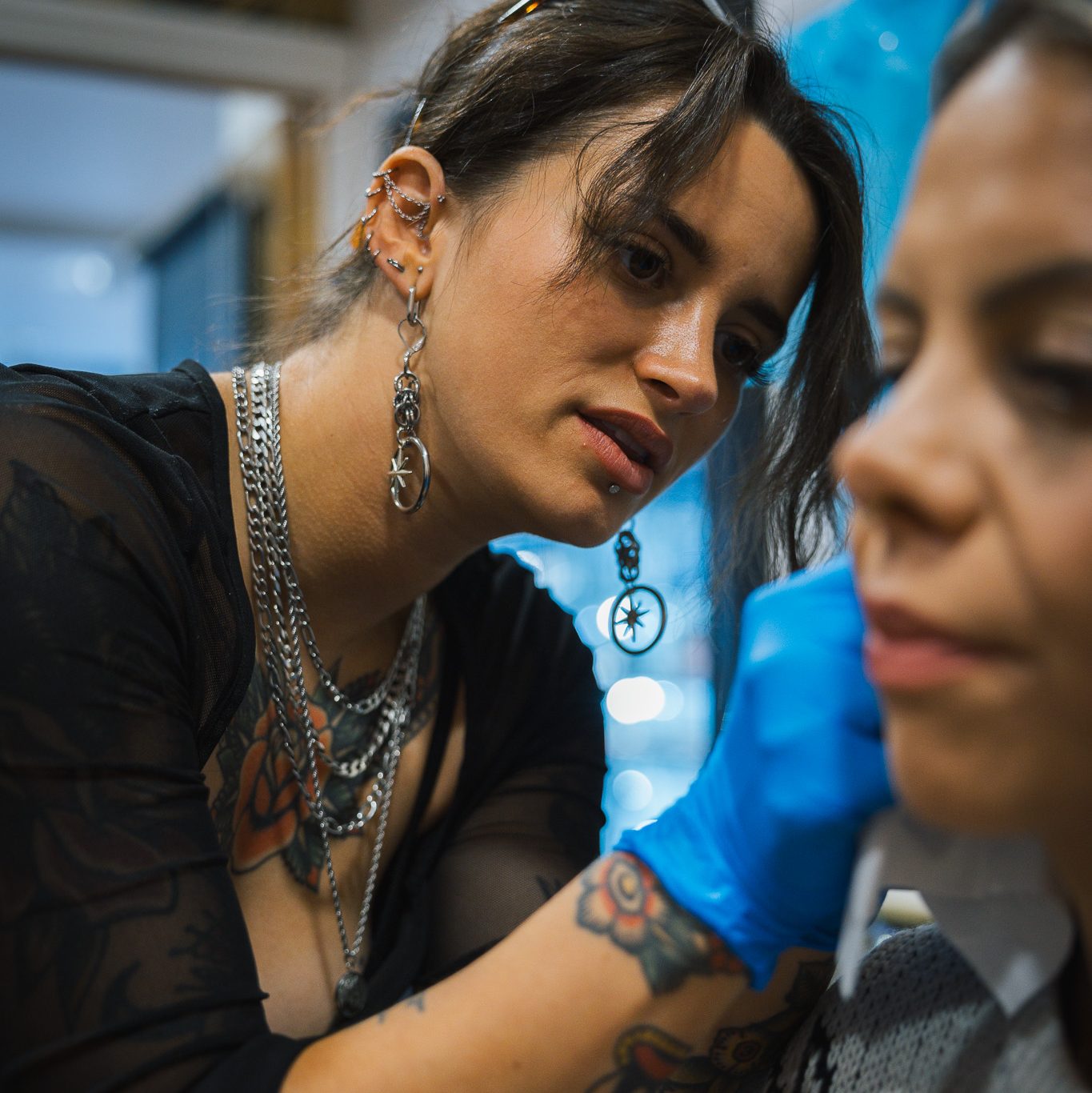
I would recommend beginning your stretching journey with your piercer’s guidance, especially if this is your first stretch. Your piercer will ask you questions about the health of your piercings, and of yourself. It is not safe to stretch fresh piercings, so it’s best to wait until they are well established. And, assuming you are beginning with your stretching journey with your earlobes, your piercer will also advise you if your piercings are placed correctly for the size you wish to achieve. For example, too low, and you may end up with thinning at the bottom of the lobe, and you may not be left with enough skin to continue stretching to a larger size. With correctly placed lobe piercings, your stretches should expand easily with plenty of skin on all sides to keep it healthy.
A piercer may use tapers or insertion pins on small gauge piercings in the very beginning of your journey, as stretching at such small sizes can be challenging without the right tools. We typically use lubricant such as KY jelly to allow the jewellery to glide through with ease, and you may find that this pinches. This is quite normal at smaller sizes, even with a tiny stretch of 0.8mm or 1mm. Stretching an initial piercing size of 1.6mm a further 1mm is almost doubling the diameter of initial piercing. Typically, you can expect a little heat and a little irritation, maybe even a bit of itching from these first few stretches. If it is causing you considerable amount of pain, stop, and wait a few months before trying again. Pain is your body telling you to stop what it’s doing and reassess, particularly for earlobes.
I’m going to add in a little addendum here to address the topic of tapers. There has been some considerable controversy over the years about the safety, or lack thereof, from stretching with tapers, and as someone who has stretched nearly two dozen face, ear, and body piercings, I will weigh in with my own opinion. Tapers are a great tool to aid with safe stretching if used by a professional who has experience with stretching. They are not designed to be used to rapidly skip sizes, nor should they be used to force a stretch when the skin is not ready. Dead stretching, which I will cover further down, is a much safer method of stretching, however both methods can result in blowouts if forced, so I would always recommend seeking out the advice of your piercer.
It is important not to rush the process. It can be easy to think that as soon as your skin has settled that you are ready for the next step, but this isn’t the case. Your body will need time to adjust to its new size, and for the skin to relax. The initial few weeks after a stretch, your skin is only just stretched enough to accommodate the new jewellery, and it simply won’t be ready to move to the next size until that skin has relaxed enough. I know that I keep repeating this point, but time really is the key here and I cannot stress that enough. If you are unsure, speak to your piercer who will be able to see and feel when you are ready for the next size.
Larger Gauge Stretching
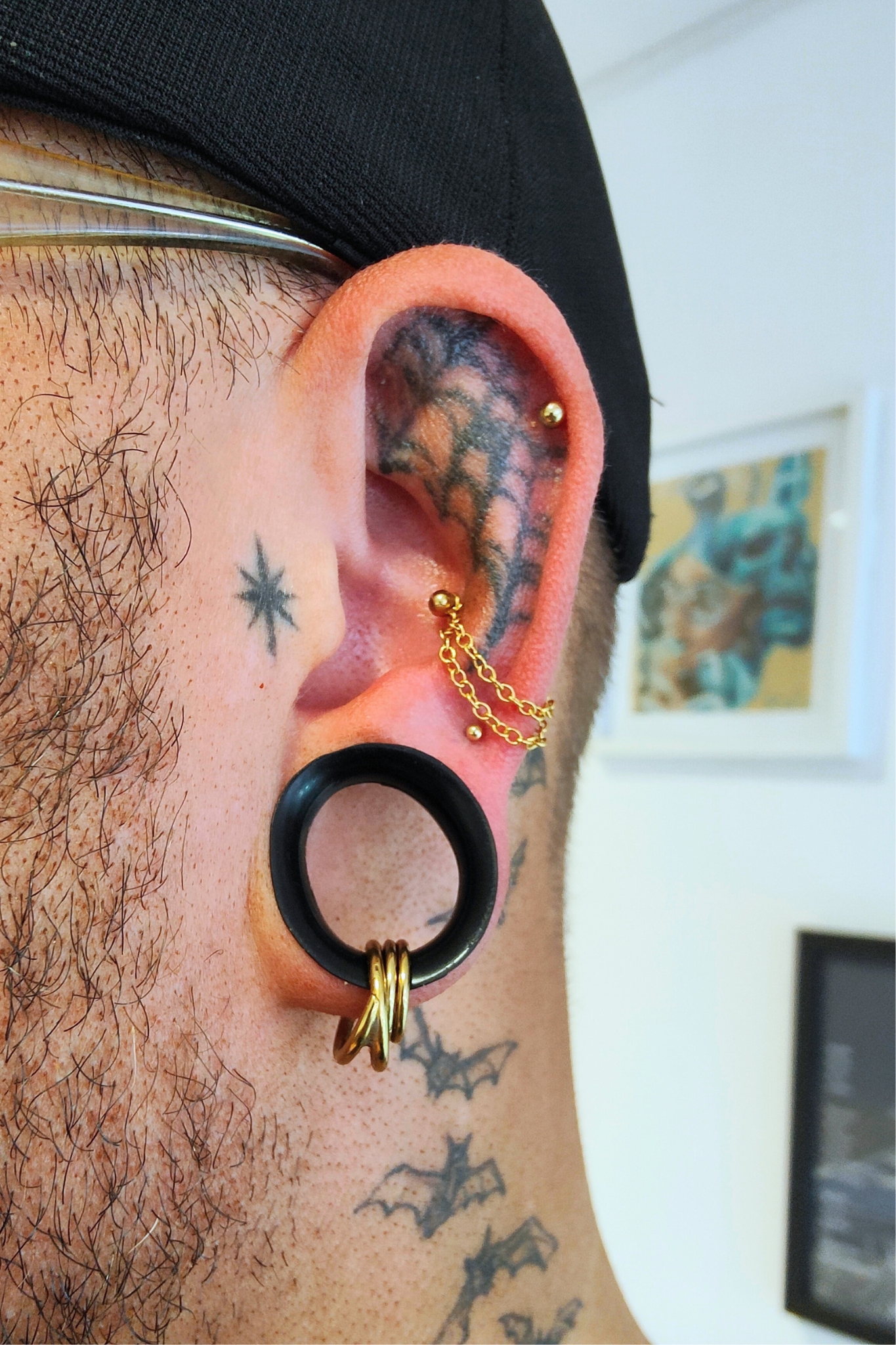
Reaching larger sizes means that the methods and the rules change ever so slightly. You may not need tapers to help you stretch once you have reached 10mm or so, and you may find that you can move on to what is known as ‘dead stretching’. Although this sounds quite scary, this method simply involves waiting until your skin is loose enough to accommodate the next size. For some, this is an easy feat, for others, not so much. A warm shower and plenty of body safe lubrication can help, but remember not to force this, there is no winner if you rush. The jewellery may slide in with ease, and it may need a bit of gentle persuasion, but I reiterate, do not cause yourself pain. If it doesn’t fit, stop, scale back to your original jewellery, and try again in a month or longer.
Moisturisation and Massage
This one is key and so often overlooked by those beginning their stretching journey. During stretches, the skin will be tight and will require a little help to remain hydrated. Moisturising and the subsequent massaging needed to moisturise will help to keep the skin supple as well as promote blood flow and help the skin to stay strong. Keeping up a daily moisturisation routine is a great way to keep your lobes healthy and to stay connected with what may be going on with your piercing.
Cleaning
Anyone with stretched ears will tell you, the funk is real. This phenomenon is not exclusive to just stretched jewellery and can happen to almost any piercing, but that smell you smell when changing stretched jewellery is the smell of trapped dead skin cells and oils. There are dozens of hacks, deodorants, and products that people will use to keep the smell at bay, but there really is only one method that works, and the best news is it’s completely free… cleaning. Cleaning your stretches and your jewellery every other day will stop that funk from building up, as well as keeping you in touch with the health of your stretch; just remember to moisturise after every wash.
Downsizing
This is the most underrated and underrepresented part of the stretching journey, but I promise that this is one of the most important elements of stretching and is directly linked to the patience needed to stretch any piercing. Downsizing will inevitably lengthen the time you spend reaching any goal size, should you have one, but it is crucial and should never be overlooked. Even at small sizes, downsizing can offer several key benefits. The first is, it allows your skin to breathe, relax, and strengthen. Every time you downsize, you allow your skin to repair a little bit of the damage caused by stretching, and helps to thicken and strengthen the skin. The tension in the ear relaxes and helps new blood vessels to form, and all of these help your ear to cope more readily to the next upsize. Typically downsizing for a month or two between every 5mm or so helps your body to acclimate to the new size and build strength. Having thick, healthy lobes is far safer than rushing the stretch to get to your goals. Slow down and practise patience.
Outdated Stretching Methods
There are plenty of different stretching methods that seemed to be in circulation during my stretching journey, and I tried plenty of them, but there are a few I absolutely do not recommend.
- Taping your jewellery – any tape that you cannot identify the material, or that has an adhesive is going to be a no go for your piercing. These materials may cause allergic reactions in your skin. Having said this, a popular method for stretching is to use PTFE self-adhesive tape, also known as bondage tape. This tape does not allow foreign matter to stick to it, and uses static to stick to itself, removing the need for potentially allergenic adhesives. This method is still used for larger gauge stretching beyond 20mm as it allows much greater control for in between sizes, as well as effective downsizing.
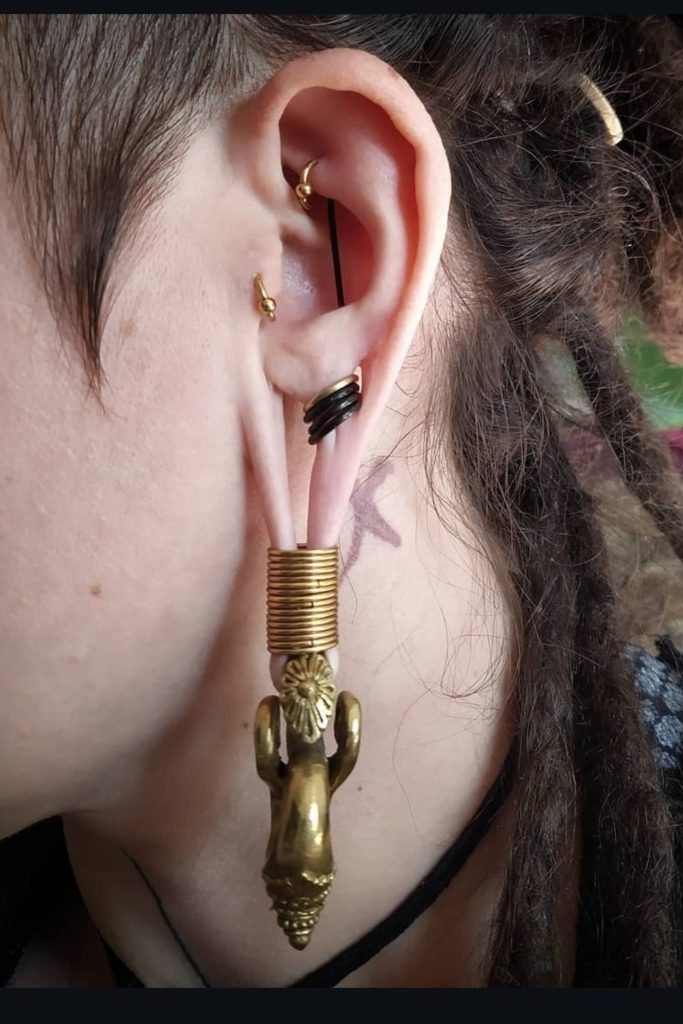
- Weights – ear weights are a beautiful way to adorn fully stretched ears but be mindful that heavy weight in stretched ears can cause thinning in the lowest portion of your earlobe relatively quickly. I would not recommend this as a main method of stretching, though it can be effective in giving yourself a break from plugs and tunnels for a day, or to wear something a little different.
- Ear Scalpelling – this practise is now illegal in the UK, though in the early 2000s, this was a common method for instantaneous ear stretching. This method involved using a scalpel to cut upward from a pre-stretched earlobe, toward the ear cartilage to gain another 15 to 20mm of earlobe. Please note that this practise is no longer available in any piercing or body-modification studio in the UK and is not a medically approved procedure.
- Tapering – I know, I know. I just covered tapering as a safe method to stretch, but it’s incredibly important that you understand the intended purpose of these tools, as well as how to use them correctly. I have seen a few harrowing videos cropping up on Instagram of people skipping sizes. One video in particular features a “piercer” forcing an 8mm taper into a fresh 1.6mm piercing. This is NOT stretching, this is tearing the skin, and causes significant damage and trauma to the skin. It is irresponsible, dangerous, and these kinds of videos give a very false depiction of how stretching should be achieved. I dread to think how painful this was for the client, and the subsequent healing issues that resulted from this horrible practice. I do not recommend stretching over 1mm at a time, and it’s horrifying to me that anyone would stretch over 6mm in one sitting.
Risks
Thinning
This is the most common issue with stretching that I have seen, and this is the result of stretching quickly, with no breaks, and no downsizing, particularly at larger stages, though this is not the only way you can experience thinning. My own earlobe has undergone significant thinning long *after* I had finished my journey of stretching. I received a nasty mosquito bite right on the lower edge of my earlobe and I was not quick enough to deal with the resulting infection. My right earlobe is now incredibly thin in one place and I have had to stop wearing stretched plugs and tunnels as a result. The cold can also have a negative impact on your earlobes at larger sizes, so be careful to avoid wearing metal in icy conditions and try your best to cover your earlobes to keep the blood flowing.
Blowout
This happens with rapid and dangerous stretching over a very short period of time, and by skipping more than a few sizes at a time that causes significant trauma to the ear, typically through pushing a taper through your ear to the point of bleeding and pain. Blowouts happen when the tissue is pushed out of the back of the fistula (the piercing scar hole), and if left untreated, can cause permanent visible damage with surgery being the only way to reverse this kind of damage. It’s incredibly unlikely that you can heal your way through a blowout, and the only option at that stage is to remove the jewellery and allow your body to heal the trauma.
Breakage
Breakage is the result of a lack of blood flow to the area, though this can happen for many reasons, not just improper stretching. When stretching too rapidly, you can cause tears in the skin which sit on the inside of the fistula, right against the piercing jewellery. The pressure involved in the stretch, coupled with the jewellery sitting up against the wound can prevent this from healing, and over time can both thin the ear, and cause infection in the wound. Infection can, in extreme circumstances, lead to the tissue dying off as blood is unable to flow to this area and cause the skin to snap. This is a horrible way to end your stretching journey, and this can only be rectified through surgery. Snapped earlobes are a good reminder to take your time, be gentle, and listen to your body.
As discussed, breakage can also happen through other means, not necessarily through improper stretching, such as cold, infection, and injury. I know many people who have suffered an earlobe snap from simply attending a festival or gig, or from snowboarding in extreme cold, I have even met someone whose earlobe snapped after suffering a mosquito bite.
While there will always be an inherent risk from wearing stretched piercings just as there is a risk from wearing regular piercing jewellery, stretched piercings are a wonderful way to express your individualism, practise patience, and even reclaim your body autonomy through safe body-modification. Stretching is a beautiful and ancient practise that allows us to connect with our bodies in a practical way, and I hope that this guide helps you to move into the world of stretching with patience and care.