|

Anatomy is an incredibly fascinating subject. Piercers all over the world rely on this field of study to perform piercings, better their skills, and understand complications such as rejection, migration, and overall piercing viability.
It goes without saying that anatomy is unique to each and every one of us. We all have unique attributes, be it face, body, or even ears, that make our appearance uniquely ours, and that extends to things we cannot even see. These differences can make it tricky, and sometimes impossible to perform certain piercings, and it can be disheartening to be told no to a piercing you’ve dreamed of having for some time. But not all is lost. A good piercer will be able to recommend alternatives and work with you to create something as unique to you as your anatomy.
Let’s first touch on the most common ways that piercings can be anatomy dependent.
Natural Anatomy
Veins – veins are an unavoidable aspect of piercing. Whenever you receive a piercing or tattoo, we will ultimately be puncturing small blood vessels, and this is what leads to bleeding. The only time that we will halt a piercing is the presence of large veins, whether these are visible through the skin, or with the aid of a torch. Veins are a common issue for tongue piercings, as there can be one or two rather large veins that can obstruct the piercing path. We will always perform a visual check underneath the tongue, as well as using a torch to highlight any deeper veins that are not easily seen, in order to prevent us from piercing through these veins. If there are any prominent veins in the path of the piercing, we will decline to perform the piercing as this can lead to excessive and continuous bleeding.
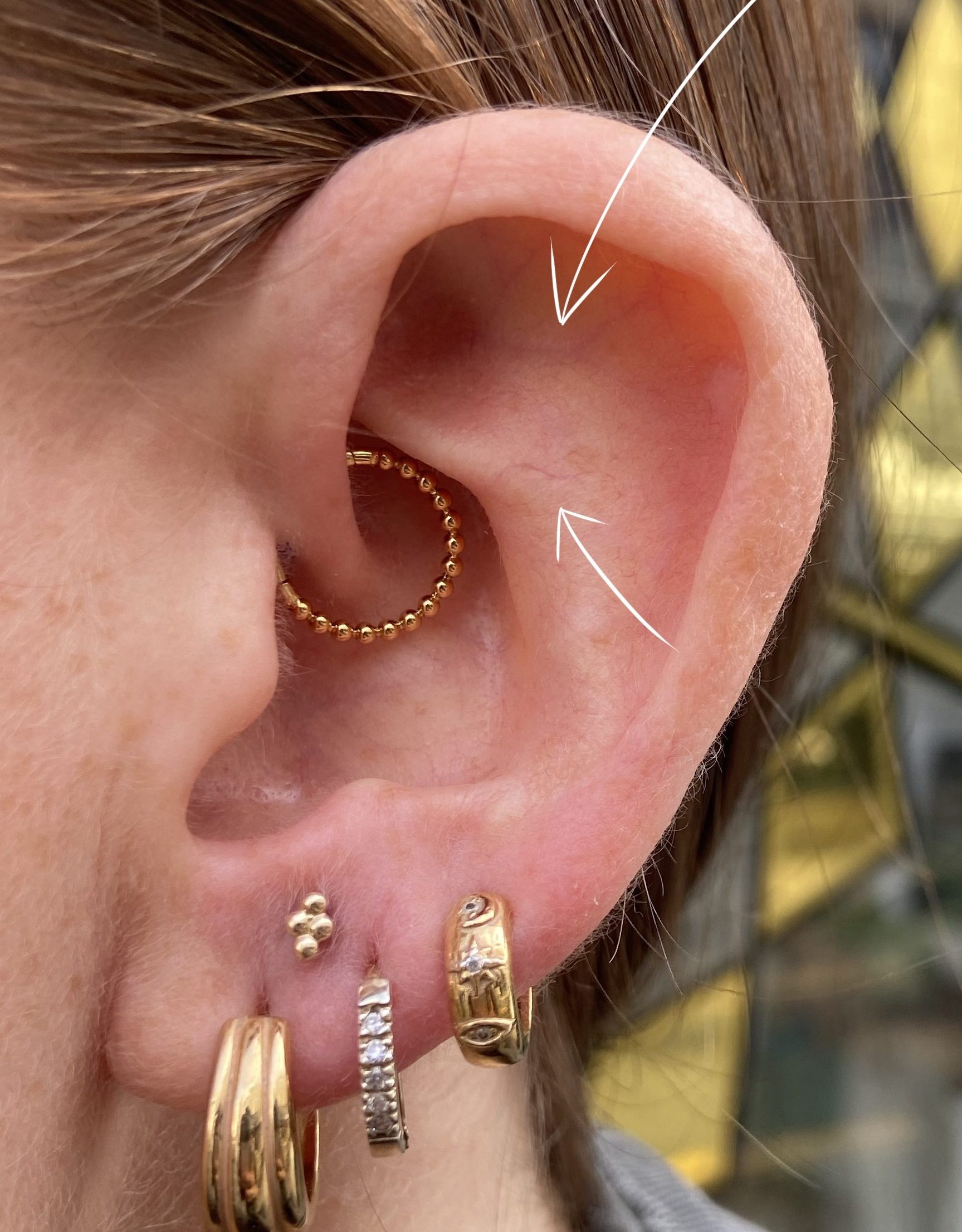
Thread Veins– these are very small but visible veins that are close to the surface of the skin and can cause excessive bleeding if pierced. They are most common under the tongue, on the inside of lips, cheeks, and even on the flat of your upper ear. For tongue piercings, this will likely mean you will not be able to have the piercing, but in the case of your flat or helix, a different location will be recommended.
In this image, you can see two typical types of thread veins that we come across. We will often check the upper thread vein with a torch to ensure that we avoid this during the piercing.
Lack of Tissue – this is a very common issue with piercings such as belly buttons and industrials, and to a lesser extent with rook piercings, daiths, tragus, and eyebrows. This should be relatively self-explanatory; however, many people simply don’t understand that in order to perform a piercing you need tissue to pierce, and without that tissue we cannot perform the piercing. Navels are notorious for having little to no lip at the top of the belly button, meaning that in a few short months the jewellery will simply push out of the body.

Deviated Septum – this one is of course unique to septum piercings and is a relatively common issue for many looking to get this piercing. While a deviated septum does not always prevent you from getting a piercing, it can alter the way that the piercing looks, particularly when wearing rings. If you have a deviated septum, your piercer will discuss your options with you, and give you a realistic expectation on how the piercing will look on your anatomy.
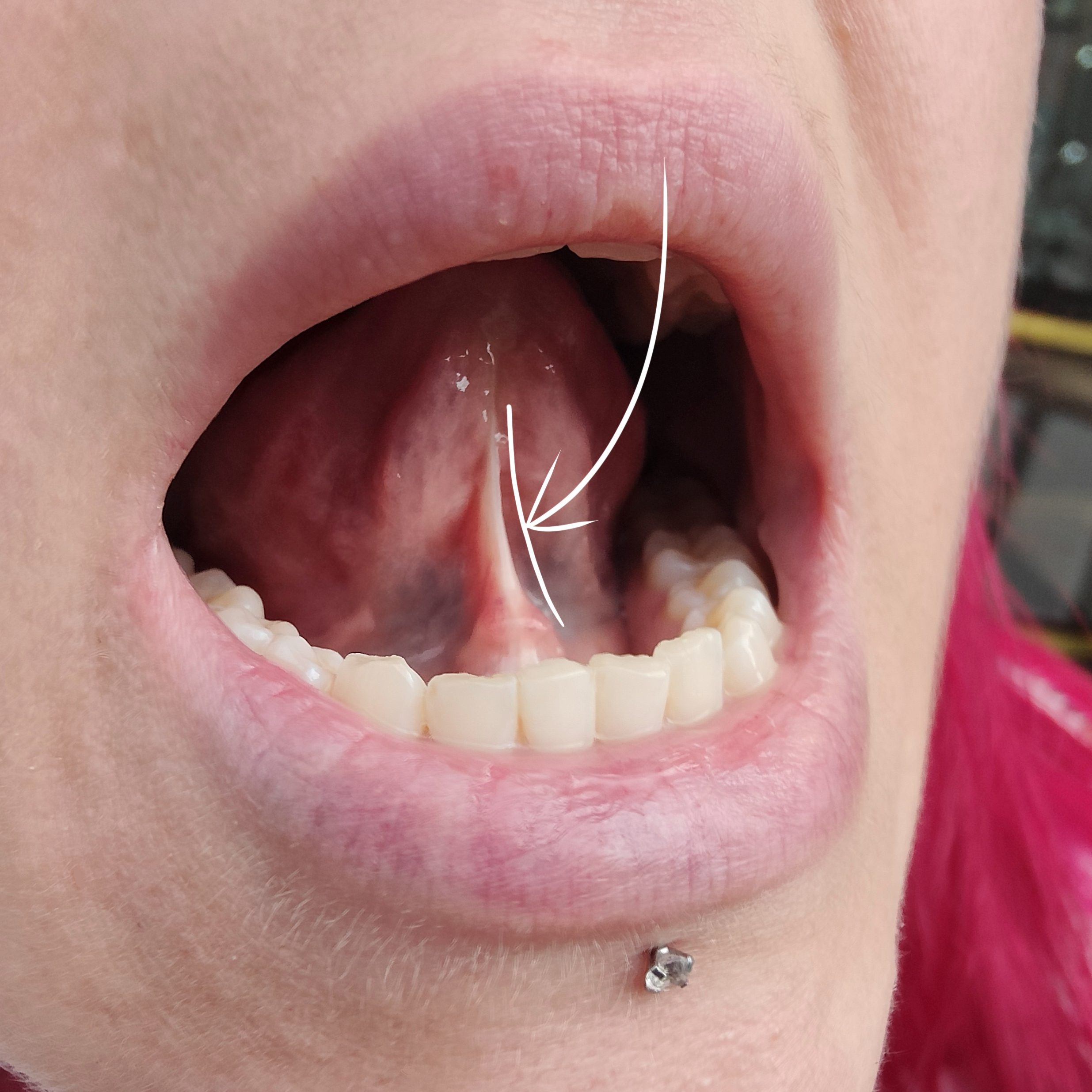
Tongue Webbing – the tongue features regularly on this list due to the difficulties to do with anatomy, and one of these issues is tongue webbing. For some, this webbing can extend rather far toward the tip of the tongue, commonly known as being “tongue tied” though this is somewhat of a misnomer. This webbing can prevent a piercing bar from sitting correctly and comfortably in the mouth.
As you can see from this image the tongue webbing is rather prominent and reaches quite far forward of the underneath of the tongue. Piercing next to this tissue would irritate not just the piercing, but the tongue as well. It is not advised to pierce toward the tip of this tongue webbing as the jewellery can damage teeth and gums, therefore a tongue piercing for this client would be declined.
Inverted Nipples – while it is possible to pierce inverted nipples, this will require a physical examination to check for suitability. It is possible to manually manipulate the areola outward for piercing, and this can be done with massage, a cool pack, or even with a breast pump, though if this doesn’t work then it’s likely you will be unable to move forward with this piercing.
Cosmetically Modified Anatomy
Lip filler – With the boom in popularity of non-invasive cosmetic surgery, one particular procedure we come into contact with often is lip filler. Firstly, this common procedure can impact your decision to get any lip piercings, be they standard labret or upper lip, but particularly any vertical piercing such as the vertical labret or Ashleigh piercing. We do not recommend getting lip piercings after receiving lip filler, particularly immediately afterwards, as this can cause infection in the piercing as well as the filler site, as well as impact the position of the piercing in the long term. Similarly, we would urge you to wait at least 4 months after a lip piercing before receiving lip filler for the same reasons as above.
Ear pinning – It is important to express to your piercer that you have had ear pinning as this can have a significant impact on your healing any cartilage piercing. Even when performed as a child, the stitching that ear pinning can make it tricky to have conch piercings, as well as upper helix or flat piercings.
Other Types of Anatomy Dependent Procedures
Dermals vs Surface piercings – While appearing at first glance as one and the same, dermals and surface piercings are performed in different ways and use different jewellery. A dermal is essentially a ‘one point piercing’. The piercing has one entry hole, and the ‘foot’ of the jewellery sits in a pocket created under the skin.
Much the same as bridge piercings, surface piercings have an entry and exit hole with two visible points on the skin and are most commonly pierced with a staple bar that sits under the skin. Where a surface piercing may not be viable, a dermal may be more suitable, however the same is not true for the reverse. If a dermal is unsuitable, then it is highly unlikely that a surface piercing will be unsuitable as well.
Both methods have a high rate of rejection, particularly if pierced in a non-viable position on the body, however I have seen many healed versions of both dermals and surface piercings. With these being notoriously tricky to heal, your piercer will perform a thorough examination of the tissue on the intended site to check for viability and recommend alternatives if the piercing is not possible.

Bridge – Bridge piercings are still relatively uncommon, though they have risen in popularity in the alternative scene in recent decades. Sitting directly between the eyes, this visually impactful piercing is akin to an eyebrow in healing, though anatomy plays a much bigger role in whether you can have one.
For many, the bridge is simply too narrow to accommodate jewellery, for others the skull can protrude too far forward under the tissue which prevents any tissue from being pierced. It has also been argued in recent years that there are major blood vessels that run down the front of the nose which may lead to profuse bleeding if pierced, and many studios are not insured to perform this piercing.
You can see from this image that there was sufficient tissue in front of the skull ridge, and enough width to allow the jewellery to sit beneath the skin with minimised chance of rejection.