
|

Downsizing is one of the most often talked about subjects in any piercers. Many people don’t understand the need to wear oversized jewellery in their fresh piercing, and certainly don’t understand the need to downsize a piercing after the initial swelling calms down. We will outline why it is so critical to downsize as soon as possible.
Angles
Angles play a huge role in piercing, and there are so many more things at play than simply getting the front of the piercing to sit neatly next to another piercing. In order to heal a piercing properly, keeping that perpendicular angle throughout the healing stage is key, and downsizing your piercing is the first and most important way to do this.
Any conscientious piercer will pierce with a longer bar for the initial stage of healing. This long bar is there for one important reason, swelling. Swelling can be significant on some people. Sometimes this can last a week, sometimes two, and for some unfortunate people, this can last a month, but it is vital to allow your piercing room to swell, in case the unfortunate happens. Having a bar that is slightly too long in those first few weeks is much more favourable than having a piercing bar embed into your skin because it was pierced for appearance rather than for healing.

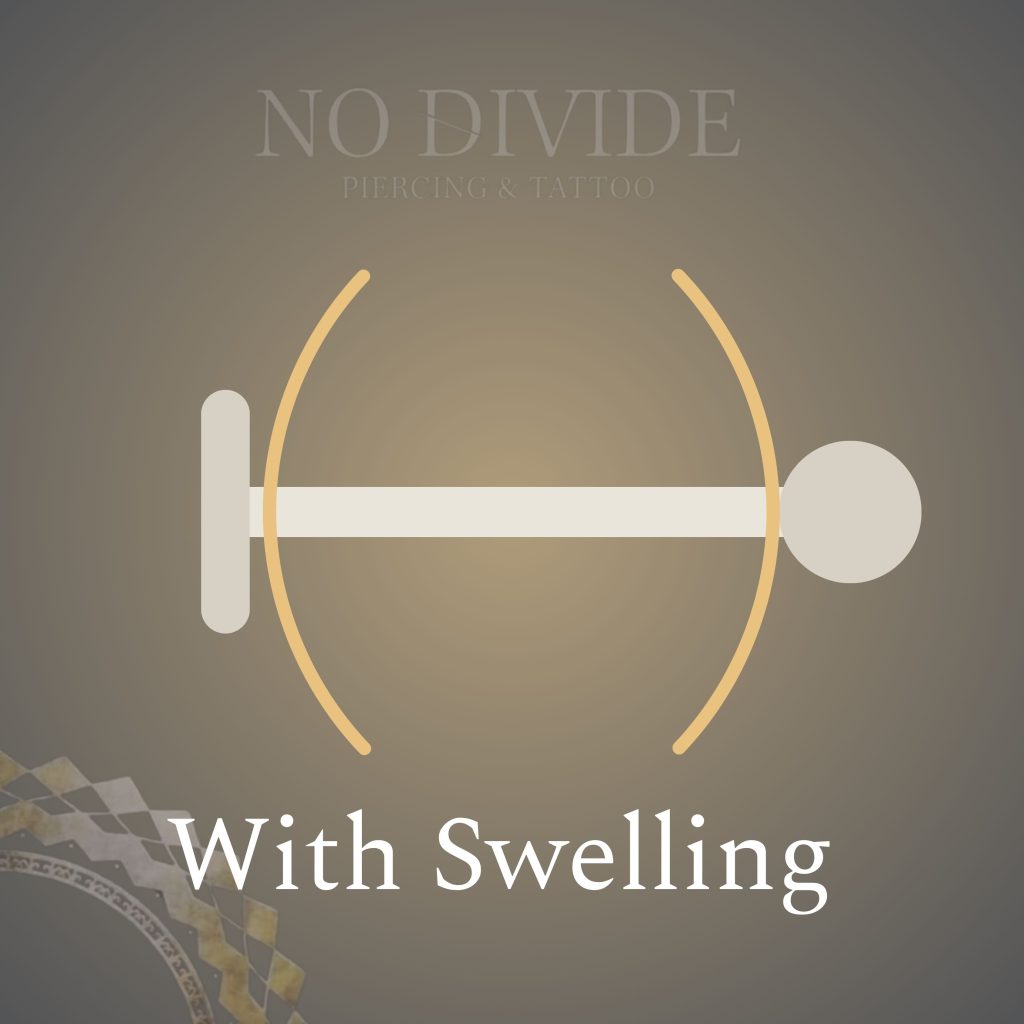
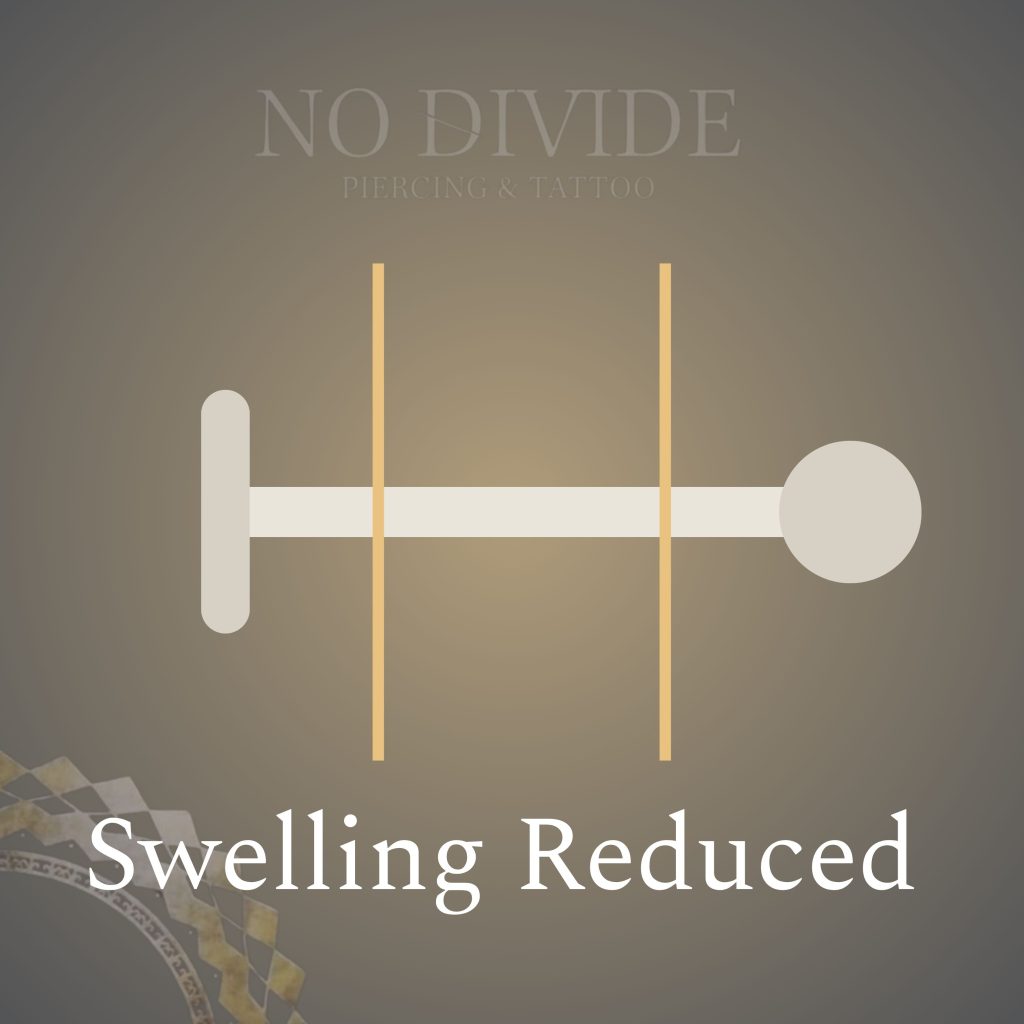
Despite this, a bar that is too long can cause its own set of irritations. It can be pushed in all sorts of angles when you sleep, use headphones, wear hats, whatever it is you’re doing. If this bar has pressure from any angle for too long, you could end up with irritation bumps on your piercing. This may cause your piercing to tilt to compensate for the bumps in the way. Your piercing can eventually assume that angle over time, and this will be disappointing for anyone wanting to wear a specific piece of jewellery. This is where downsizing can help to avoid this outcome. With a shorter bar, you have less chance of the bar shifting to a different angle through pressure, irritation, or even simply gravity.


Dirt and Debris
Another key reason to downsize is dirt and debris. Piercings tend to be relatively crusty in the early stages of healing. That crust is lymph that helps to keep a wound sealed, similar to the way a scab works. With a long bar, this crust can be pulled through a piercing causing pain and irritation, as well as introducing bacteria to your piercing. Downsizing to a small bar reduces this drag-through, and helps to prevent bacteria ending your piercing, a win win!
When to downsize is different for everyone. I am a chronic sweller and it can take me months to downsize, and for some of our clients it can take a week. It really is dependent on how your body reacts to a piercing. Your piercer is the best judge for this, and it’s best to be completely honest.
Typically, if you can see at least 2mm of bar without touching your piercing, then it’s time to downsize. However, if you have a history of swelling, particularly when adjusting jewellery, then we would advise waiting just a little longer to ensure you don’t swell with the new jewellery.
Downsizing does not mean you are ready to switch to a ring, it simply means that the initial swelling has reduced, and the more long-term portion of your healing journey has begun. It’s important to stay patient during this time, as switching jewellery “just to see” can set you back to the beginning, causing swelling and irritation all over again. It’s best to stick with your downsized jewellery and allow your piercing to heal in peace.

Here you can see a beautiful example of a pair of fresh cartilage piercings, with longer initial jewellery to account for swelling. This is a perfect example of the perpendicular angle you should expect from a professional piercer. Pierced by Katelyn.
The only time we would recommend further changes to your jewellery during the long-term healing phase is if there has been significant swelling, and an upsize is necessary to mitigate this issue. Swelling during this phase can be caused by a number of things, such as a knock to the piercing site, an irritation such as debris entering the piercing, pressure from sleeping, dehydration, and even sickness from a cold or flu. Particularly when sick, your body will see any sort of foreign object as a threat or something it would rather discard so it doesn’t have to deal with it while fighting a virus.
My lobe piercings are a strong indicator that I am about to come down with a pretty awful flu, and even after two decades of healing, they will swell, itch, and cause me pain in the days leading up to my sickness. Pay attention to your body, and that mysterious swelling may not be so mysterious after all.
We always recommend listening to your piercer about returning for your downsize, as this will help you to avoid irritation and migration, and keep you and your piercing happy and healthy.