|

A common question we get asked in the studio is whether we pierce with rings. We all want to wear that gleaming ring from the very beginning, and it’s an understandable desire. There are places on the body that are simply made for a ring, lobes, noses, helix, even a tragus. But rings are not designed for initial piercings, and there are a few key reasons for this. Let’s deep dive into the different types of body jewellery for initial and healed piercings and explore why rings are not the most suitable choice for most piercings.
Labret Bar

With a long post and a flat disc at the back, the labret bar is the most common style of jewellery available for many initial piercings today. The disc gives a flat profile at the back of the piercing, perfect for protecting teeth in oral piercings such as lip or philtrum, as well as keeping out of the way inside the nose.
We predominantly use labret bars in lobes, noses, lips, cartilage, conch, and tragus piercings, along with a few other less common piercings. There are of course limitations to this style of jewellery, for example this shape is not suitable for a rook piercing that requires a slight curve to the bar, and the same goes for a daith. The disc at the back will likely press into the skin at an uncomfortable angle and lead to rejection.
Typically, we would use a straight labret bar in piercings with a clearly defined site that has a parallel entry and exit. Think of the skin of the lobe, where a bar can be placed perpendicularly to the flesh in a perfect right angle.
This style of jewellery also allows for more controlled cleaning of the site for smooth healing, as the bar will have very limited range of motion, and will reduce the amount of bacteria that is able to enter the jewellery with everyday movement.
Straight Barbell
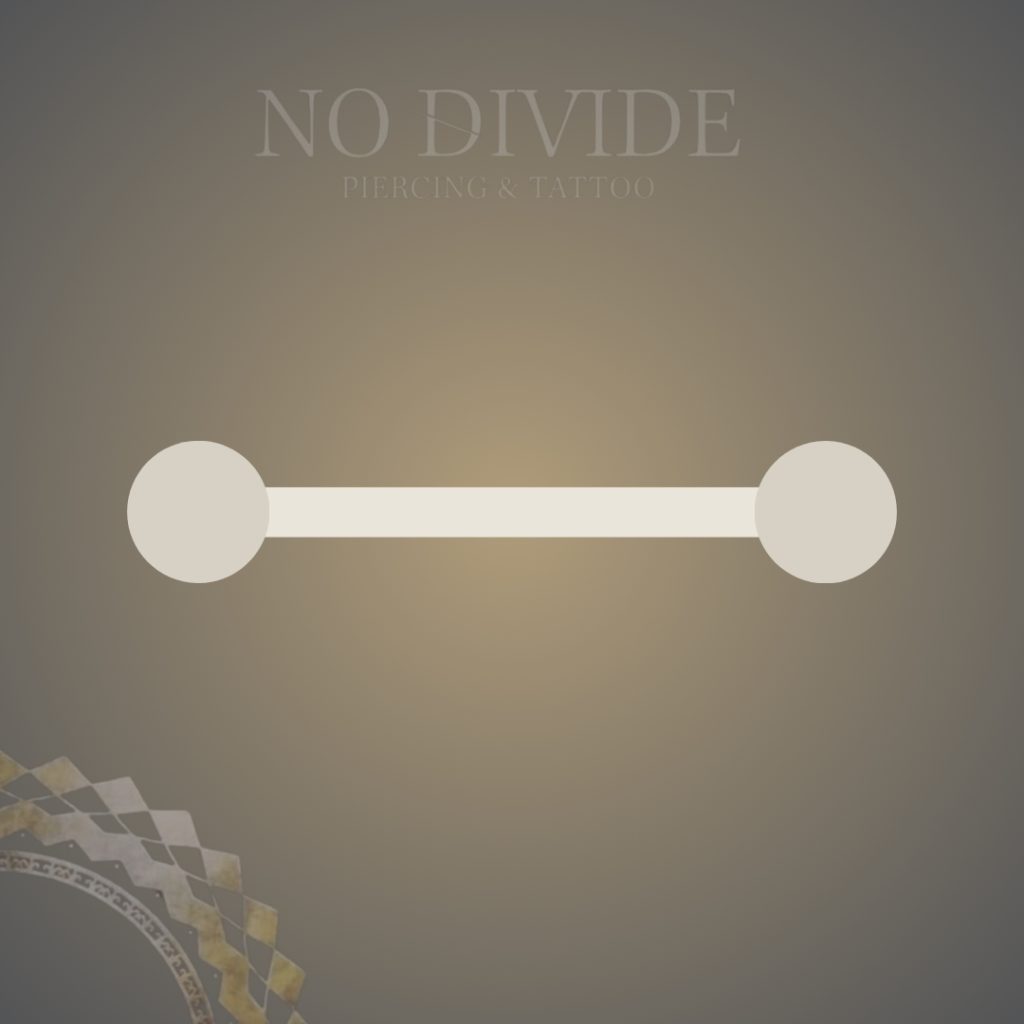
This form of jewellery used to be the most popular style during the earlier days of modern piercing, and was frequently used in initial piercings such as lobes, cartilage, conch, and even eyebrow piercing. This was usually because barbells were easier and cheaper to manufacture, and we simply hadn’t learned of safer and more fitting alternatives. Simply put, the industry has come a long way in developing better jewellery.
While this style has been replaced by the labret bar in terms of practicality and ease of placement, this piece is still the only suitable option for certain piercings where both ends of the jewellery will be visible, such as a bridge piercing, an industrial, and a nipple piercing, as well as healing a tongue piercing. This style is effective and simple, and as the saying goes, if it ain’t broke, don’t fix it!
Curved Barbell
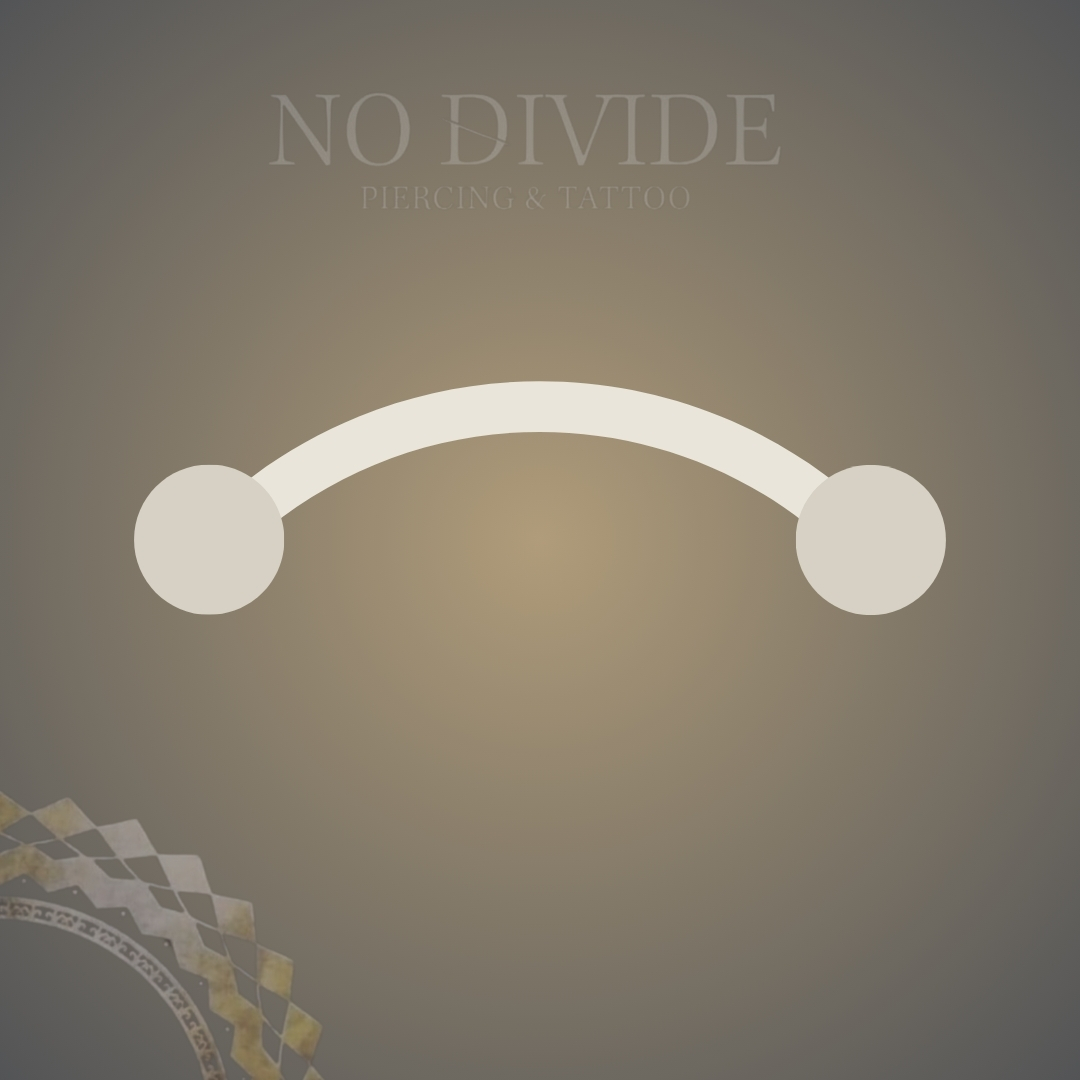
This one is a more specialised shape designed specifically for piercings that don’t have a typical parallel entry and exit. This style of jewellery is meant to fit an angled piercing with an angle of roughly 145 degrees such as a rook, daith, navel, eyebrow, or vertical labret.
A straight bar would put too much pressure on the centre of the piercing and force the bar to push out toward the surface. In these circumstances, we would use a curved bar to relieve the pressure and to allow a more form fitted piercing room to heal. This type of jewellery is *not* suitable for a surface piercing.
Hinged Rings/Captive Bead Rings

Rings are a truly beautiful way to decorate your piercing, with so many different styles and colours available, it’s a wonderful way to express your individual style. However, despite the allure of a perfectly placed ring in your brand-new piercing, most piercings are not suited for a ring during the healing stage, and this is to ensure a pleasant and unproblematic healing process.
As opposed to a bar, which only has a certain amount of movement before the ends prevent any further movement, a ring is free to move as much as it likes. In a brand-new piercing, this can cause irritation bumps through too much movement. It can also open yourself up to infection as the ring pulls through your fresh piercing and deposits any bacteria that may be sitting on the outside of the ring.
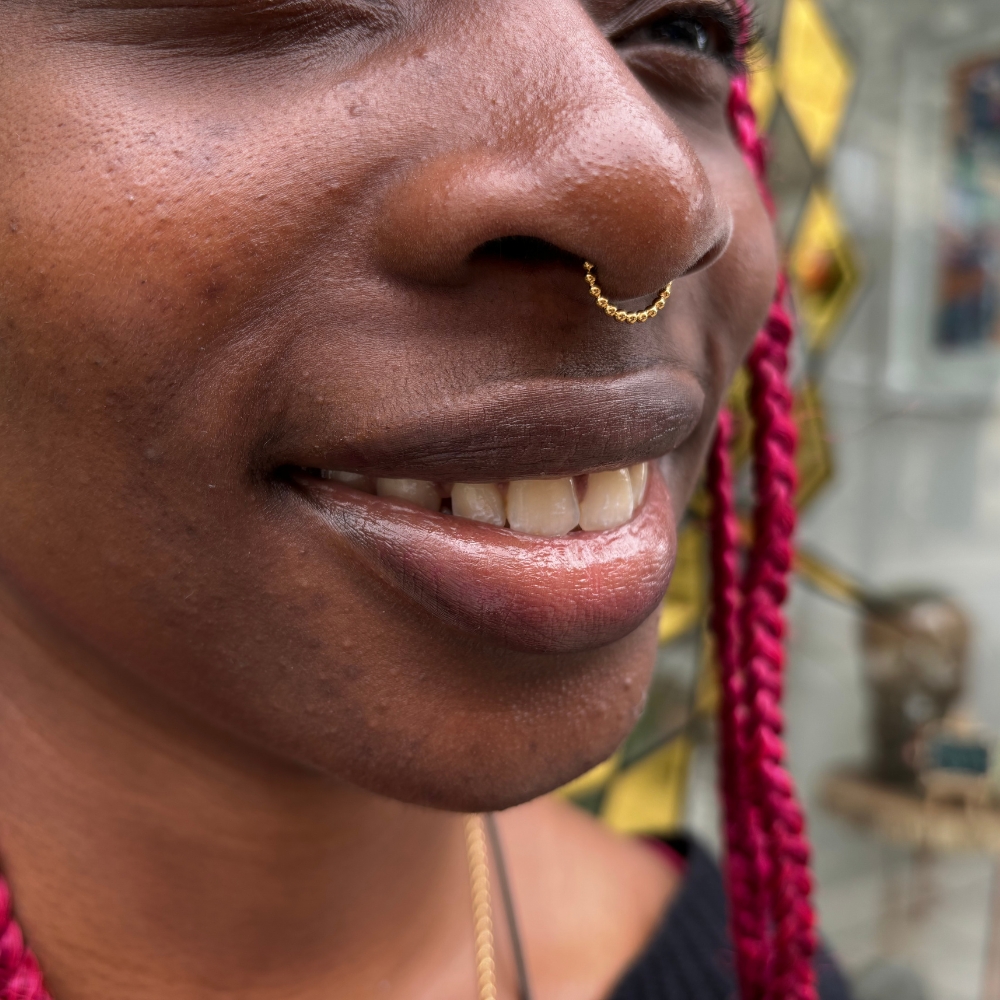
There are only two piercings that we offer rings as standard, the septum piercing, and the daith.
The correct placement for a septum piercing is known as ‘the sweet spot’, a thin piece of skin that is quite high in the nasal cavity, and forward of the septal nasal cartilage. This can be extremely tricky, and not to mention a little uncomfortable, if pierced with a bar. Since seeing the entry wounds of the piercing is nigh impossible, the best way to clean and maintain this piercing is with a ring that is easily seen, and with the skin being so thin, there is no risk of the curve of the jewellery causing any damage or causing this piercing to reject.

The daith is an unusual and incredibly tricky placement, and while this piercing most certainly can be pierced with a curved barbell to account for the roughly 145-degree angle of the site, a ring is often a more practical solution for many.
A ring will sit neatly in this space and take up far less space than a curved bar, and especially if you are wearing hearing aids or regularly wear earbuds, then a ring is going to be the more practical option for your initial piercing. With this in mind, this piercing is inherently more challenging to heal. A daith typically takes 18 months or more to heal, even with a strong cleaning regimen.
Staple Bar
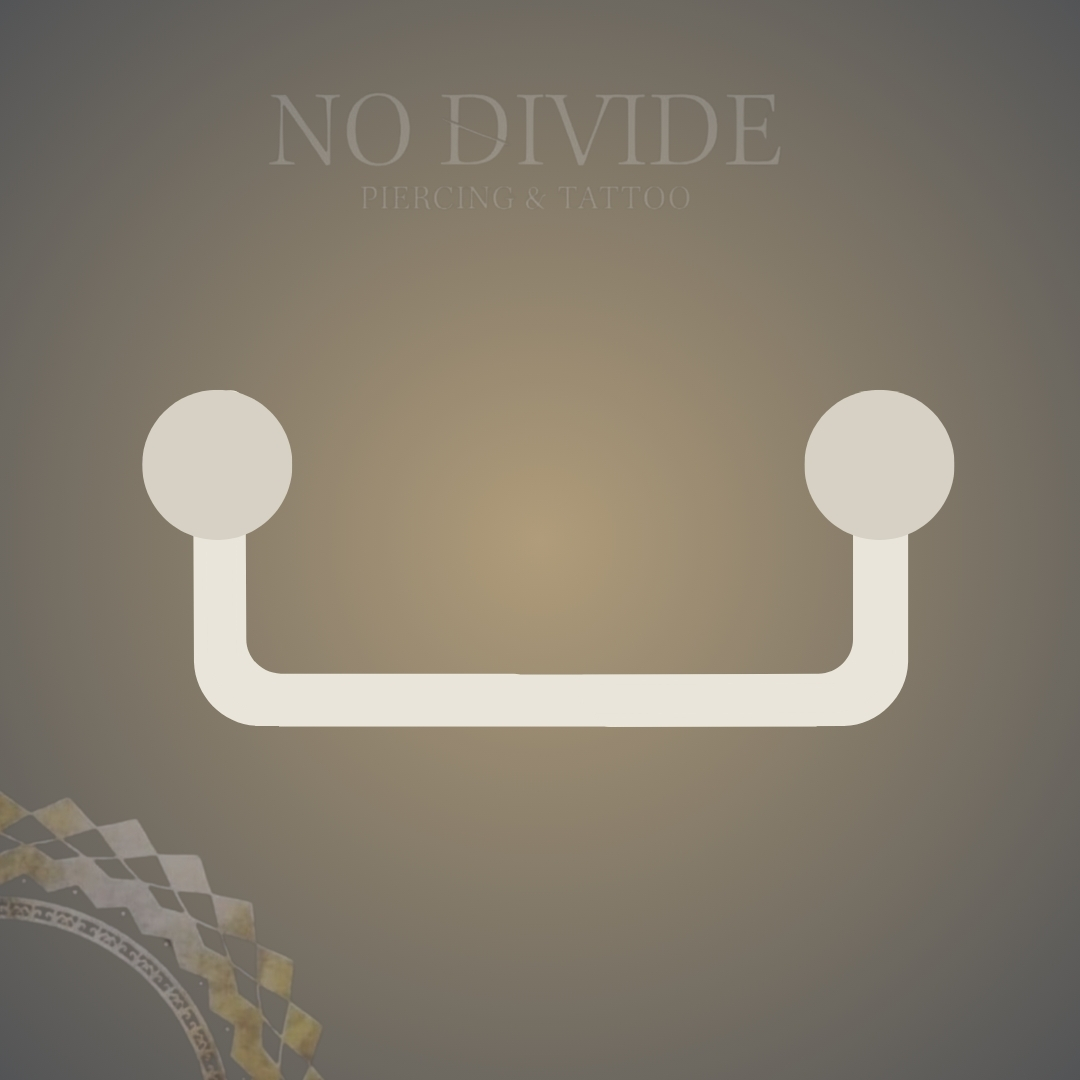
This is a specialised piece of jewellery that is designed exclusively for surface piercings. A surface piercing is pierced with entry wounds that are parallel with one another, but these entry wounds are next to one another with a 180-degree entry and exit. – see image- When surface piercing was in its infancy, there were only two types of jewellery available, the curved barbell, and PTFE bendable bars, which I will touch on briefly below.
Through tentative trial and obvious error, it was clear these two materials were not sufficient and something else needed to be designed for a better success rate, and so, piercers began to bend their own bars to form staple bars with a right angle at each end. This jewellery was designed to sit flat under the skin, with the posts sitting vertically upright at right angles, causing little to no pressure on the surrounding skin, and allowing for a more comfortable healing journey.
The predecessors of the Staple Bar
A curved barbell sits at roughly 145 degrees. When placed in a surface piercing the bar pushes downward at the entry wounds and pushes upward in the centre, and thus rejects in a relatively short time. This style was popular for a short time in the early days of surface piercing, but soon fell out of favour due to its poor success rate in healing a surface piercing.
There are still piercers that use curved barbells for surface piercings despite the mounting evidence that curved barbells are unsafe for this type of piercing, so be mindful if you are looking to get a surface piercing, and research your piercer!
PTFE bendable bars became popular with women wanting to keep their navel piercings during pregnancy back in the early 2000s, the bar being softer and more pliable while keeping the piercing open. The logical step for many piercers at the time was to try this material in surface piercings, and it certainly had potential. For one, lymph and blood is unable to stick to this material, which made it a very comfortable piece of jewellery to wear in initial surface piercings as cleaning was wonderfully easy.
You may have already heard of PTFE in its most popular form, Teflon, which is the brand name for non-stick pans. With this information in mind, it’s not difficult to see why this material is particularly good at preventing anything from sticking to it. It may have been this thought process which inspired the use of PTFE in piercings in the first place
This type of bar would need to be manually bent into shape before piercing, which seemed like a great solution for custom fitting surface piercings at first. However, a right angle is essentially impossible to maintain, and would need constant re-bending to keep the shape. This would eventually put too much pressure on the surface piercing as it straightened itself back up over time.
No amount of bending would keep this from happening, believe me, I have many memories of diligently bending my nape piercings every day, which of course caused additional problems (as well as some wonderful scars on the back of my neck). Indeed, I myself have had many surface piercings with PTFE bars, and while I can certainly attest that these piercings lasted longer than a surface piercing with a curved barbell, they ultimately had no real staying power, and staple bars really are the only option for surface piercings with any hope of longevity.
Horseshoe Bar

This style of jewellery is a cross between a bar and a ring, with the same circumference as a ring, with screw on balls at either end of the bar. This style is very popular for septum piercings and is a great option for the initial piercing as this style can be flipped up inside the nose to hide the piercing for jobs that are not accepting of piercings.
Retainers
I am adding this jewellery type here as we get asked about this almost every day. Can we pierce with retainers? The answer is no. Retainers are made from a plastic such as acrylic or in some cases PTFE which are not autoclavable materials, and therefore are unable to be sterilised before piercing. There are also not that many length options to be able to size up with swelling or size down with healing. Simply put, retainers are not designed for healing, they are designed for well established, fully healed piercings. Once your piercings are healed, you are free to swap to retainers as often as you like, but it is not safe, sterile, or sensible to pierce with a retainer.
I hope this blog has helped you to understand the differences between the jewellery we offer. The reasons we choose to (or not to) pierce with certain jewellery types is to give your piercing the best chance of healing. This has come from years of observation, learning, and understanding how the body reacts to the different types of body jewellery we have used over the years. Piercing knowledge has never been greater, and it’s through these years of learning our craft that we are able to give you the best possible information to help you on your piercing journey.